
PP Woven Bags vs BOPP Laminated Bags: Which Packaging is Right for Your Business?
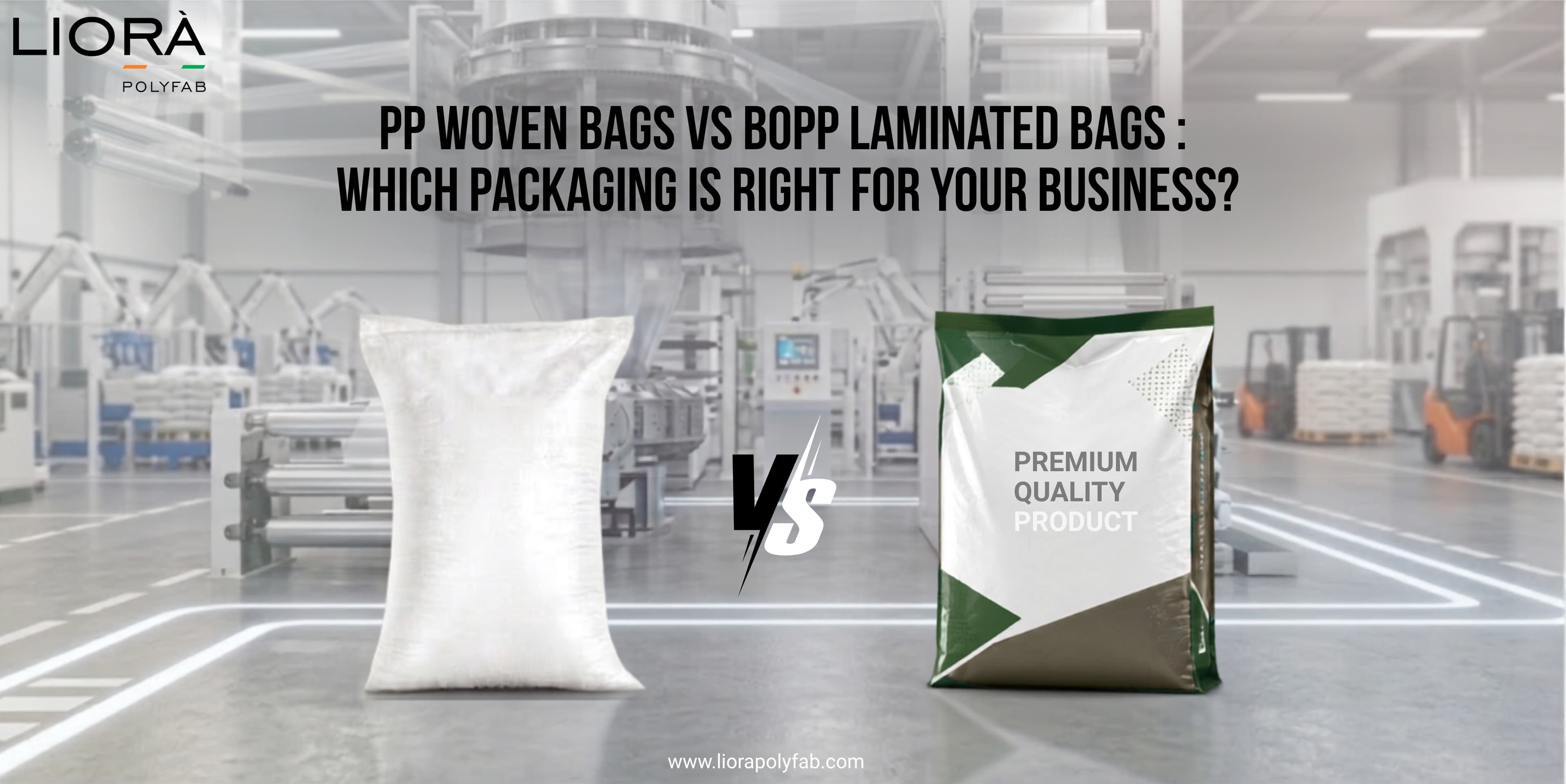
Choosing between PP woven bags and BOPP laminated bags? This guide explains the key differences in strength, durability, moisture resistance, printing quality, cost, and ideal applications to help you select the right packaging solution for your business.
If you run a business that packs grains, fertilizer, cement, chemicals, sugar, rice, pet food, or any other bulk product, you have probably faced this question at some point: should you go with PP woven bags or BOPP laminated bags?
Both look similar from a distance. Both are made from polypropylene. But the way they perform, the way they look, and the way they cost you money over time are very different.
This blog breaks down both options in plain language. No jargon, no fluff. Just the facts, the specifications, and a clear answer on which bag fits which business.
What Is a PP Woven Bag?
A PP woven bag is made by weaving strips of polypropylene, called tapes or yarns, in two directions - warp (lengthwise) and weft (crosswise) - on a loom, the same basic idea as weaving cotton cloth, except the thread here is plastic tape instead of cotton fiber. This weaving creates a fabric that is light in weight but carries a surprising amount of load without tearing.
The raw material starts as polypropylene granules. These granules are melted and extruded into a thin film, which is then slit into narrow tapes. The tapes are stretched (this is called drawing) to align the plastic molecules and make the tape stronger. Once stretched, these tapes are wound onto bobbins and fed into circular or flat looms where they get woven into fabric. The fabric is then cut, and bags are formed by folding and stitching or by heat-sealing the sides, depending on the bag type.
PP woven bags are used almost everywhere in bulk packaging - rice mills, flour mills, fertilizer plants, cement factories, sugar mills, salt packers, and even the construction industry for sand and aggregates. Their biggest selling points are low cost, high strength, and the ability to handle rough transport and stacking.
For businesses that want a straightforward, tough, and affordable bag with no printing beyond a simple design, PP woven bags are usually the first choice. LIORÀ POLYFAB produces PP woven bags in various sizes and weights, built for exactly this kind of heavy daily use.
What Is a BOPP Laminated Bag?
A BOPP laminated bag starts life exactly like a PP woven bag - the same woven polypropylene fabric forms the base. The difference comes after weaving. A thin, clear film called BOPP (Biaxially Oriented Polypropylene) is bonded onto one or both sides of the woven fabric using heat and pressure, along with an adhesive layer of molten polypropylene that acts as the glue between the film and the fabric.
This lamination does three things. First, it seals the small gaps between the woven tapes, which makes the bag far more resistant to moisture, dust, and fine powder leakage. Second, it creates a smooth, glossy surface that is ideal for printing - logos, product details, barcodes, and full-colour artwork print cleanly on a laminated surface, while a plain woven bag can only take a basic, low-resolution print. Third, it adds a layer of protection against UV rays and abrasion, which helps the printed design and the bag itself last longer during storage and transport.
BOPP laminated bags are the standard choice for products where branding matters and where the contents need better protection from moisture - think packaged food grains, pet food, chemical powders, seeds, and any product a business plans to sell directly to a retail shelf rather than move in bulk to another factory.
If your product needs a bag that looks good on a shop shelf and also survives a warehouse, LIORÀ POLYFAB supplies BOPP laminated bags with custom printing done to match your brand exactly.
Understanding the Specifications: GSM, Denier, and Mesh
Before comparing the two bag types on strength, cost, and looks, it helps to understand the three numbers every manufacturer will mention: GSM, denier, and mesh count. These three numbers decide almost everything about how a bag performs.
GSM (Grams per Square Meter): This tells you how heavy the fabric is per square meter of area. A higher GSM generally means a thicker, stronger fabric, though it also means more raw material and a higher cost. Light bags for grain or seed packaging often run between 60 and 90 GSM, while heavy-duty bags for cement or minerals can go up to 150-200 GSM.
Denier: This measures the thickness of the individual yarn or tape used to weave the fabric. It is calculated as the weight in grams of 9,000 meters of the tape. A tape rated at 500 denier is thinner and more flexible, suited for light products, while tapes rated between 1200 and 2200 denier are thicker and handle heavier loads with better puncture resistance, though the fabric becomes stiffer to handle.
Mesh Count: This is the number of tapes woven per inch in the warp and weft directions, written as something like 10x10 or 12x12. A tighter mesh, such as 13x13, creates a denser fabric with a smoother surface and better barrier properties, which is why tighter mesh fabric is usually chosen as the base for BOPP lamination. A looser mesh, like 8x8, allows the bag to breathe, which matters for products like onions or certain grains that need airflow.
These three numbers work together, not separately. A bag with high GSM but low-quality tape can still be weaker than a bag with slightly lower GSM but well-engineered, high-denier tape. This is why it pays to ask your manufacturer for the exact GSM, denier, and mesh count rather than just asking for "a strong bag."
Which Bag Performs Better in Real Use?
Strength and Durability: Which Holds Up Better?
Both plain PP woven and BOPP laminated bags offer similar core strength since the woven fabric does most of the work. Strength mainly depends on tape denier and weave tightness, not lamination.
The difference comes in surface durability. Plain woven bags are more prone to fraying and wear during handling. BOPP laminated bags have a protective layer that reduces abrasion, fraying, and scuffing, making them more durable in repeated use.
For puncture resistance, denier matters most—higher denier means better protection, regardless of lamination.
Moisture Resistance: Which Protects Better?
Plain PP woven bags are not fully waterproof, as tiny gaps in the weave allow moisture and dust to enter over time. This is fine for materials like sand or cement.
BOPP laminated bags have a sealed film layer that blocks moisture, dust, and contamination. This makes them ideal for food grains, powders, seeds, and products that must stay dry.
If moisture protection is important, laminated bags are the better choice. For basic transport, plain woven bags are more cost-effective.
Printing and Branding: Which Bag Looks Better?
If your bags are only used for internal transport, printing quality isn’t very important. But for retail or branding, it matters a lot.
Plain PP woven bags have a rough surface, so printing looks basic, usually limited in colors, with less clarity and faster fading.
BOPP laminated bags have a smooth, glossy finish that supports high-quality, multi-color printing. They hold fine details, logos, and text clearly and resist fading and scratches.
If branding and shelf appeal matter, laminated bags are the better choice. For simple bulk use, plain woven bags are a more cost-effective option.
Which Industries Should Choose Which Bag?
Different industries have different priorities, so the right bag really depends on what you are packing and where it is going.
Cement and construction materials: Plain PP woven bags are the standard here. Cement does not need moisture-proof lamination in most short-term storage conditions, and the industry runs on very high volumes where cost per bag matters more than print quality.
Fertilizer: This can go either way. Bulk fertilizer moved between distributors often uses plain woven bags, while retail fertilizer sold directly to farmers under a brand name often uses BOPP laminated bags for better moisture protection and clear branding, since fertilizer can cake or lose effectiveness if it absorbs moisture.
Food grains, rice, and pulses: BOPP laminated bags are strongly preferred, especially for branded, retail-facing products. The moisture barrier keeps the grain fresh, and the printed surface carries the brand name, weight, and nutritional details clearly.
Chemical powders: Laminated bags are generally required because chemical powders are sensitive to moisture and often need clear hazard labelling and handling instructions printed on the bag.
Sugar and salt: These are hygroscopic, meaning they absorb moisture from the air easily. BOPP laminated bags protect against caking and clumping far better than plain woven bags.
Animal feed and pet food: Almost always laminated, both for moisture protection and because these are often retail products competing on shelf appearance.
Sand, minerals, and industrial waste: Plain PP woven bags work fine, since cost and raw strength matter more than moisture protection or branding.
Not sure which category your product falls into? LIORÀ POLYFAB works across agriculture, food, chemical, and cement industries and can recommend the exact bag type based on what you are packing.
Final Thoughts
There’s no single “better” option—only the right fit for your product. Plain PP woven bags are cost-effective and ideal for bulk, non-sensitive materials, while BOPP laminated bags offer better moisture protection, print quality, and branding for retail and food products.
Choosing based only on price can lead to product damage or poor presentation. The right choice helps avoid losses and improves overall value.
For expert guidance, LIORÀ POLYFAB offers both options with custom sizes, GSM, and printing to match your exact needs.